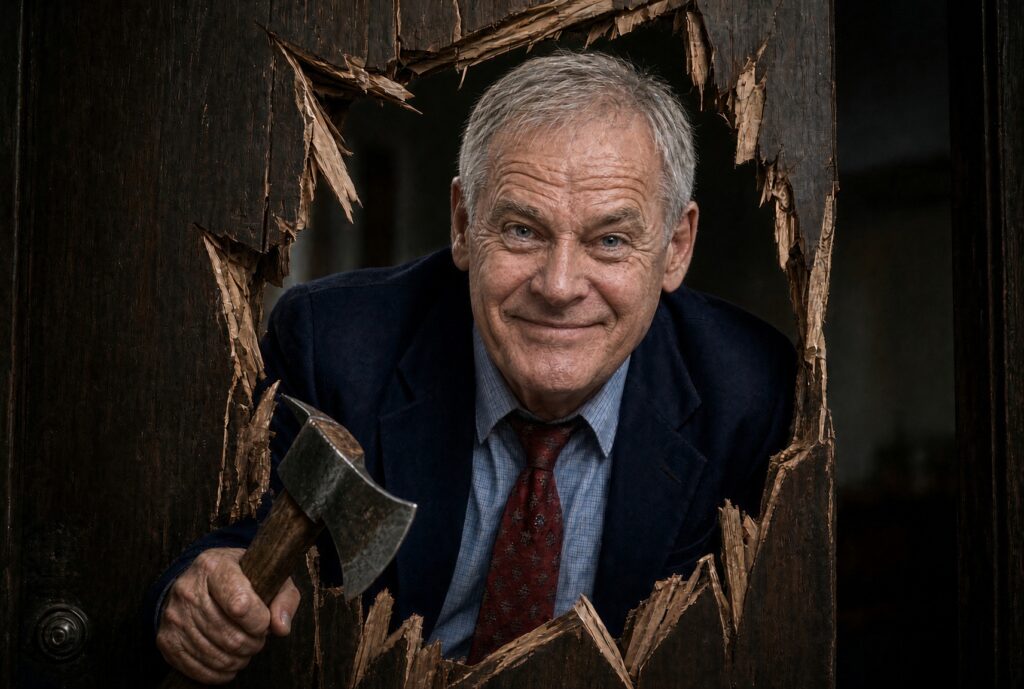
ON ILKLEY MOOR BAHT ‘AX
Read more
October 1, 2026 | 7 min read
Author: Andy Wood
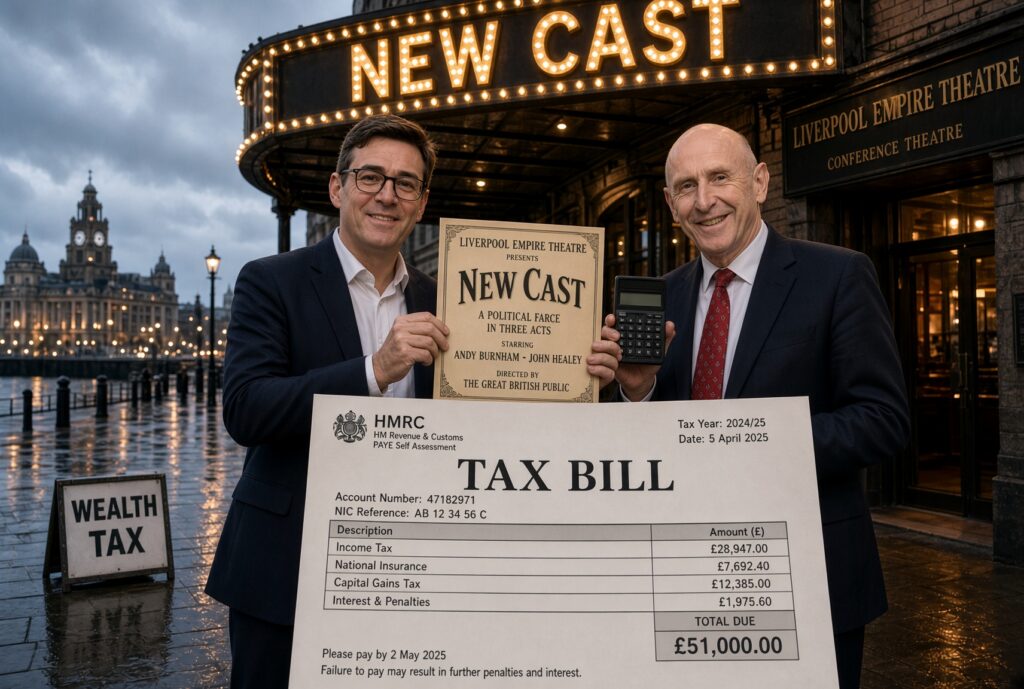
In which Andy Burnham offers a new beginning, John Healey keeps an eye on the borrowing, and conference voting for taxes that the Government won’t ever adopt.
When I wrote Labour’s mid-term tax report in May, Keir Starmer was Prime Minister and Rachel Reeves was Chancellor. The question was how their carefully worded election promises had survived contact with the Treasury. [L1]
By the Liverpool conference, Andy Burnham was in Number 10 and John Healey was delivering the Chancellor’s speech. Same parliamentary term. Different lead actors. [L2, L3]
For a taxpayer, the interesting question is whether the new production changes the bill.
So far, there are some targeted changes, a substantial promise on social care, and a great deal still waiting for the Budget.
My May verdict was not that Labour had failed to do anything it promised. Quite the opposite. VAT on private school fees and the replacement of the non-dom regime were among the high profile promises delivered.
The more awkward territory was what voters had understood from the assurances about working people, alongside employer NI increases, frozen thresholds and the inheritance tax changes affecting farms and businesses. The letter of the promise was being asked to do a great deal of work on behalf of its broken spirit. [L1]
Whereas new Prime Minister can change the political tone in a single hopium-fueled conference speech, changing the tax system requires a more sobering dose of reality.
Healey pointed to measures from Burnham’s first weeks, including the electricity VAT cut and lower business rates for pubs, clubs and music venues. Burnham said electricity VAT would disappear that Thursday. [L2, L3]
Those are identifiable changes, if you are struggling to keep a venue open.
But they are targeted interventions. They do not tell us that the employer NI increase is being reversed or that income tax thresholds are being unfrozen.
There is also a basic distributional point. A percentage reduction on an electricity bill gives a larger cash saving to someone with a larger bill. That can still be defensible. It just means that universal relief and tightly targeted help are different choices.
I would give Labour credit for announcing something a household or business can recognise. OK, a partial credit.
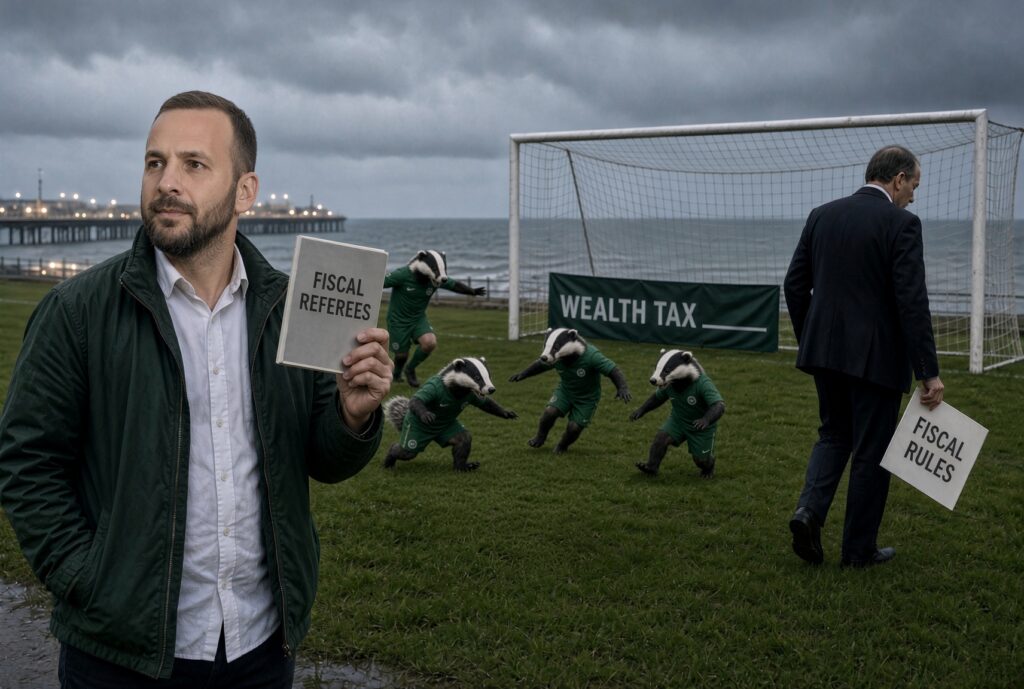
Healey’s speech contained no new tax announcement. Its central message was that spending ambitions still had to fit within the fiscal rules, with borrowing controlled and a buffer against uncertainty. [L2]
His line was admirably direct. ‘You can’t fund the ends without the means.’ [L2]
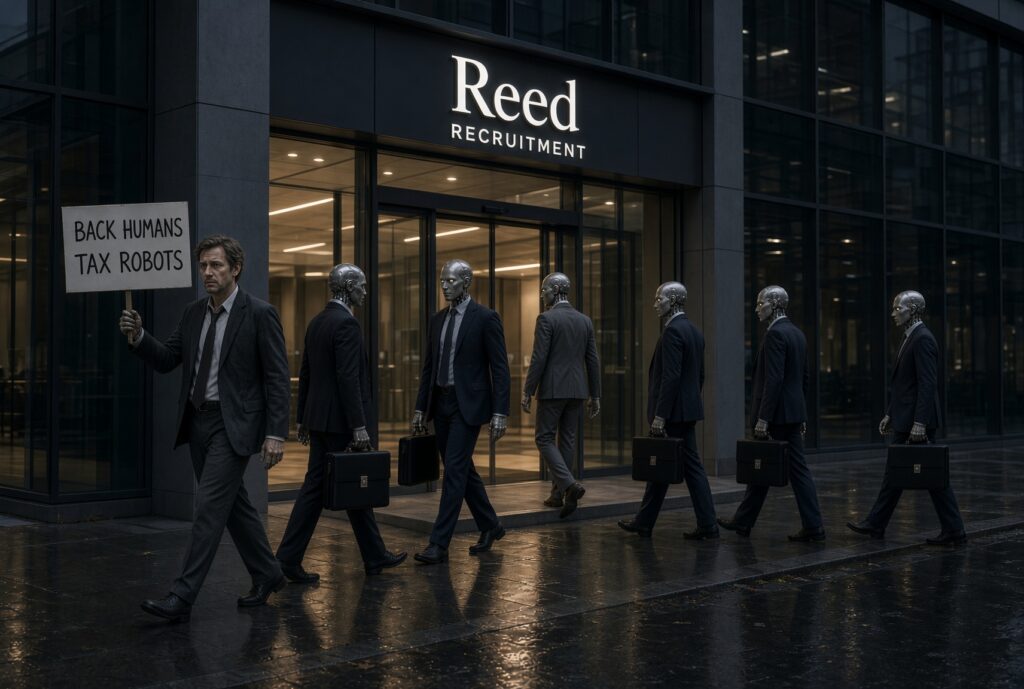
Who gave Confuscius the red briefcase?
The difficulty is that conference is excellent at producing ends. Better services. Lower bills. More investment. A Chancellor then has to find means which do not cause half the hall to discover a pressing objection to the details.
There is nothing wrong with leaving tax decisions to a Budget. But silence is not a promise of no tax rises. Nor does a commitment to fiscal discipline tell us who will bear the brunt of that discipline.
That could mean spending restraint, additional taxes, optimistic assumptions which later need correcting, or some combination. The conference speech did not settle the choice.
Yes, it did. But hold the emergency call to the family office.
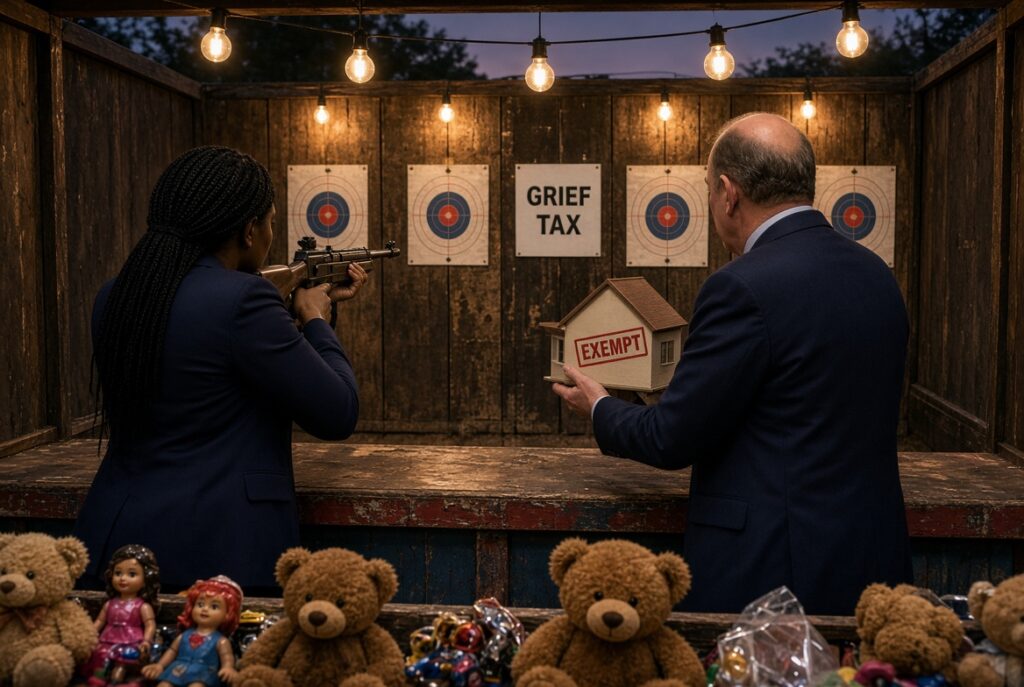
Composite Motion 11, moved by Unite and seconded by USDAW, called for a wealth tax, a windfall tax on banks and an end to the freeze in income tax allowances and thresholds. It also sought lower energy bills funded from energy-company profits, business-rates reform and more public investment. Delegates backed it. [L4]
That, however, is a conference decision and nothing more.
The distinction is particularly relevant here because this was the third consecutive Labour conference to support a wealth-tax call. [L4] Repetition demonstrates pressure within the rank and file party member who have nothing better to do then, well, vote on such things at conference. However, it does not demonstrate implementation by ministers.
Before anyone can assess an annual wealth tax seriously, we need the threshold, rate, asset base, treatment of debts, valuation rules and provisions for people whose wealth is not merely sitting in a current account waiting for someone to take a clip.
The motion’s demand to end the threshold freeze deserves attention in its own right. It recognises the same problem I identified in May.
With the main allowance and basic-rate limit frozen through 2030/31 under current legislation, rising nominal wages can increase tax bills and move people into higher bands without any rise in the advertised rates.
A worker can earn more pounds, have no greater spending power, and still find the Treasury taking a larger share.
This is why I remain unpersuaded by the idea that leaving the basic rate alone tells us everything we need to know about taxing working people.
Burnham also promised that low-income pensioners would not be dragged into income tax during this Parliament. [L3]
That is a commitment which needs an appropriate mechanism – an allowance change, a separate relief, or something else. A promise to protect a group is not yet an explanation of how the tax return will work.
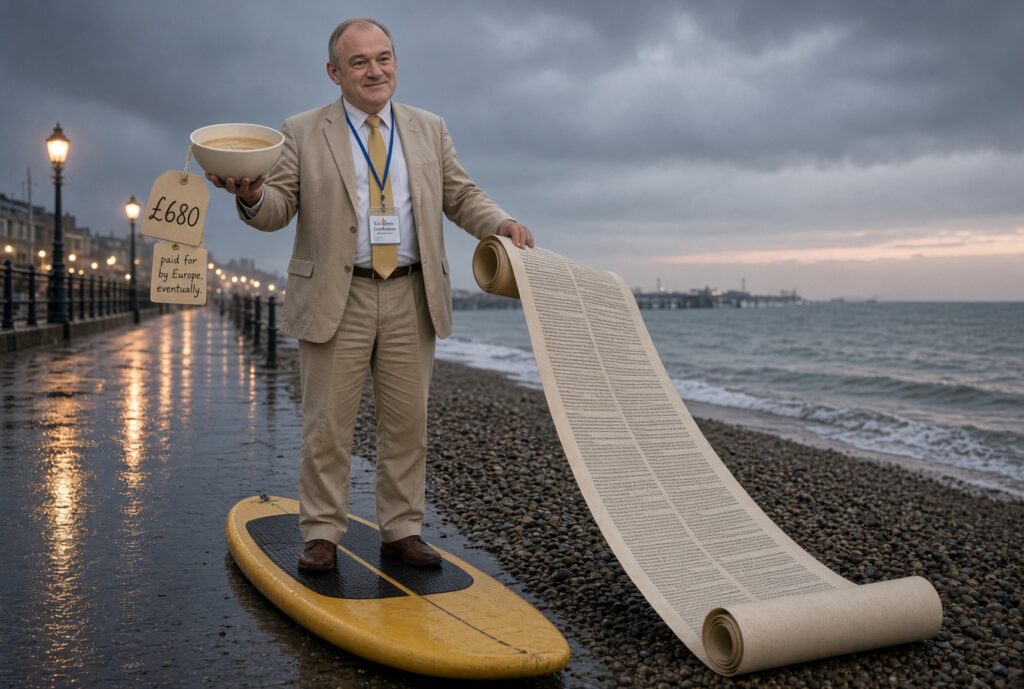
The largest new commitment was a National Care Service offering free personal care, starting in the next Parliament, with details tied to the Casey review. Burnham said it would be fully funded without borrowing. [L3]
For people worried about care costs, that is potentially far more consequential than a modest adjustment to an allowance. It also deserves proper scrutiny rather than a reflex response.
The proposed funding trade-off is a change to state-pension uprating from April 2030. The triple lock would stay for this Parliament. However, thereafter, pensions would rise by at least prices or 2.5%, with their value relative to earnings protected over time. Savings would support care. [L3]
This is not a proposal to cut the pension in cash terms. The saving would come from paying less than would otherwise have been paid under the existing formula. That distinction matters to both pensioners and the public accounts.
It also leaves some substantial arithmetic to do. The saving depends on future inflation and earnings. The cost of care depends on eligibility, the services included, demand and the workforce needed to provide them.
‘Free at the point of use’ describes the patient’s bill. It does not abolish the cost of the carer’s wages.
A credible settlement therefore needs the spending commitment and its funding shown together, year by year. Otherwise, a promise intended to remove one kind of financial uncertainty risks creating another.
| Issue | My mid-term verdict | After conference |
| Working people | Headline promises obscured the wider tax burden | Targeted bill relief; no general reversal announced |
| Frozen thresholds | A continuing source of stealthier tax rises | Delegates want the freeze ended; ministers have not adopted that commitment |
| Wealth taxation | Revenue claims needed harder scrutiny | Conference motion passed; no government wealth-tax design |
| Employer NI and farm IHT | Major areas of criticism | Leadership speeches offered no broad repeal |
| Paying for the programme | Treasury reality was overriding the sales pitch | Fiscal restraint reaffirmed; care funding needs detailed reconciliation |
Labour’s conference changed the atmosphere more decisively than it changed the tax settlement.
There is some concrete relief to acknowledge, and the care proposal contains an explicit trade-off which merits proper examination. Neither should be waved away simply because they come with a new leader’s enthusiasm.
But the old questions survive. Who pays? How much? From when? And what happens if the expected growth or savings fail to materialise?
The Budget on 28 October is where Healey will have to supply more of those answers. [L4]
Until then, the production has new stars. The taxpayer is still waiting to see the revised invoice.
[L1] Breaking Tax, UK Tax Policy Mid-Terms #1 Labour, 10 May 2026
[L2] Labour Party, John Healey conference speech, 28 September 2026
[L3] Labour Party, Andy Burnham conference speech, 29 September 2026
[L4] Chartered Institute of Taxation, Labour conference report, 2 October 2026
Published 23 September 2026
Read More
Published 17 September 2026
Read More
Published 5 September 2026
Read More
Published 30 August 2026
Read More